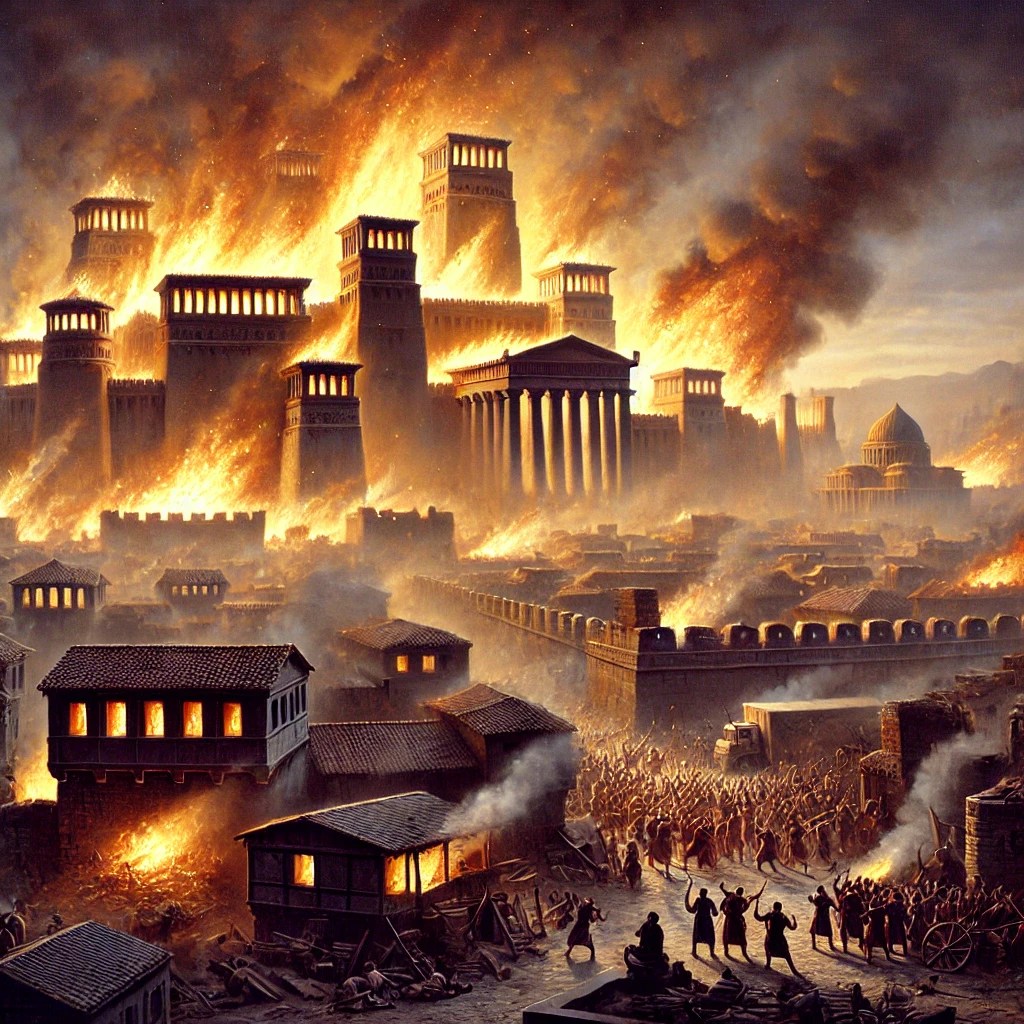
In Troilus and Cressida (1602), Shakespeare presents familiar characters in an unfamiliar way. This problem play takes Homer’s epic heroes–Achilles, Ajax, Hector, Ulysses–and represents them as a pale simulacrum of their reputations. The main plot, the failed love story between Troilus and Cressida, reinforces this satirical presentation of pagan heroism.
Set during the Trojan War, the play intertwines two main plots: the love story of Troilus (a Trojan prince) and Cressida (daughter of a Trojan priest who defects to the Greeks) and the ongoing conflict between the Greek and Trojan forces. The story follows Troilus and Cressida’s brief romance, her transfer to the Greek camp, and her subsequent (perceived) infidelity. Meanwhile, the war continues with various skirmishes and duels, culminating in Achilles’ dishonorable killing of an unarmed Hector. The play ends on a cynical note, with both the love story and war unresolved.
Achilles, Ajax, and Hector are held up as paragons of virtue and bravery in Homer–flawed heroes, but heroes nonetheless. In Shakespeare’s hands, they’re petty, flawed individuals driven by ego and self-interest. They go back on their word, display more cowardice than bravery, and generally act like immature teenagers.
Shakespeare is grappling with much deeper questions about the foundations of society itself. The play revolves around the theme of loyalty – and pursues that topic in romantic relationships and political allegiances. Through the tragic love story of Troilus and Cressida, and the political machinations of the Greek and Trojan leaders, Shakespeare asks whether a classical, pagan society can provide a genuine basis for commitment and fidelity.
The most famous speech in the play, delivered by Ulysses, initially seems to advocate for a rigid social hierarchy.
Take but degree away, untune that string,
Act 1 Scene 3
And, hark, what discord follows! each thing meets
In mere oppugnancy: the bounded waters
Should lift their bosoms higher than the shores
And make a sop of all this solid globe:
Strength should be lord of imbecility,
And the rude son should strike his father dead:
Force should be right; or rather, right and wrong,
Between whose endless jar justice resides,
Should lose their names, and so should justice too.
Ulysses argues that without proper order, chaos will ensue and society will collapse. However, the sincerity of this speech is questionable. Is Shakespeare genuinely promoting the Elizabethan World Picture and the Great Chain of Being, or is he exposing these ideas as self-serving rhetoric used by those in power?
The ambiguity of Ulysses’ speech reflects a larger pattern in the play. While characters frequently espouse lofty ideals about honor, loyalty, and social order, their actions consistently undermine these very principles. This gap between rhetoric and reality suggests that Shakespeare is not merely satirizing individuals, but questioning the entire ethical foundation of classical heroism and virtue.
What emerges is a portrait of a society that recognizes the necessity of hierarchy and loyalty, but lacks the moral framework to actually uphold these values. Everyone, from the great heroes to the common soldiers, is ultimately untrue to their professed ideals. By setting the play in a pre-Christian world, Shakespeare highlights the absence of a cohesive ethical system. Without this moral bedrock, how can authentic relationships or legitimate authority exist?
Troilus and Cressida is thus more than a simple satire or historical drama. It is a profound exploration of the foundations of social order and human relationships. The play’s resistance to easy categorization – neither fully tragic nor comic, neither fully serious nor entirely satiric – adds to rather than detracts from its power
 Experiments in Criticism